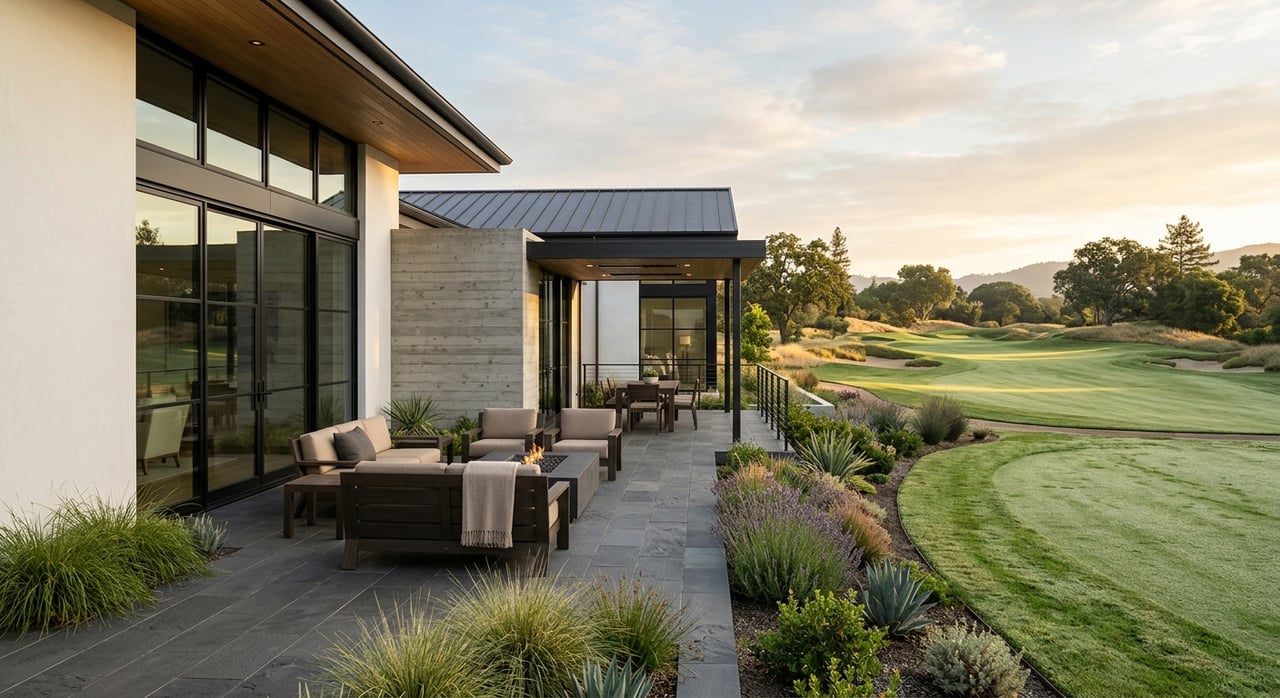
If you are searching for resort-style property in Victor, you are not just buying a house. You are often buying into a set of amenities, rules, fees, and long-term ownership obligations that can shape your experience as much as the home itself. That can feel exciting and a little complex at the same time, especially if you are comparing golf communities with more traditional Teton Valley neighborhoods. This guide will help you understand how Victor’s main golf and resort communities differ, what to review before you buy, and where careful due diligence matters most. Let’s dive in.
Victor resort communities at a glance
In Victor, the main golf-and-resort options are best viewed as master-planned, club-oriented communities rather than standard subdivisions. The key comparables are Teton Springs, now publicly branded through Bronze Buffalo Ranch, Teton Reserve in Victor, and Tributary in nearby Driggs.
Each community offers a lifestyle component, but the ownership structure is layered. When you compare properties here, you need to look beyond finishes and square footage to understand the parcel, the HOA structure, any sub-association, club access, rental rules, and design controls.
Teton Springs and Bronze Buffalo Ranch
Teton Springs is one of the best-known resort communities in Victor. Bronze Buffalo Ranch is the current public-facing brand, and the developer’s properties there have sold out, which means current opportunities are resale-only.
The amenity package is broad. Public materials highlight an 18-hole championship course, a 9-hole par-3 course, spa, dining, pool, tennis, pickleball, fitness, fishing, and winter recreation programming.
How Teton Springs is governed
Teton Springs has a master association plus several sub-associations, including Cabin & Lodge Homes, Mountain Meadows, and Village & Commercial. Grand Teton Property Management handles operations, while the Design Review Committee, or DRC, reviews construction and renovation projects.
That matters because governance is not just a formality here. The community documents affect where you can build, what exterior changes require approval, and how the property can be used over time.
Why the building envelope matters
At Teton Springs, each homesite has a defined building envelope recorded with Teton County. That envelope controls where structural improvements may be built.
In the Cabins neighborhood, the rules go even further. The property boundary is the building envelope, which makes lot geometry and permitted build area especially important when you evaluate a purchase.
Current pricing context at Teton Springs
Recent HOA meeting materials reported 16 homesites available at $150,000 to $259,000. The same materials noted Cabin HOA resales at $2.25 million and $2.449 million, Mountain Meadows resales at $1.55 million and $1.699 million, and custom homes from $2.449 million to $4.2 million.
Those figures provide useful context, but the bigger takeaway is this: in Teton Springs, value is tied not only to the home itself, but also to the lot placement, envelope constraints, neighborhood section, and access to the broader resort setting.
Teton Reserve in Victor
Teton Reserve is a 448-acre boutique golf community centered on an 18-hole championship course designed by Hale Irwin. It also includes a 500-yard double-ended practice facility.
Compared with some other Victor-area communities, Teton Reserve presents a housing mix that may feel more structured and approachable for buyers who want a semi-custom or quicker-delivery option. Public materials describe western craftsman homes, cabins, and paired homes.
What the housing program looks like
Teton Reserve’s current housing program includes a Design+Build option with fixed pricing and quick-delivery homes. Public move-in examples show 3-bedroom plans ranging from about 1,830 to 3,334 total square feet.
That can be appealing if you want a more predictable path to ownership than a fully custom build. It is still wise to confirm what is included, what timelines apply, and whether any design choices are fixed or flexible by product type.
Teton Reserve fees and billing questions
The HOA page posts 2025 quarterly charges of $380 in association dues, $125 for water, and $443.25 for sewer, for a total of $948.25 per quarter. However, a separate water page says the annual water fee is $400 or $100 per quarter.
Because those public figures do not perfectly match, buyers should confirm the current billing structure directly with the HOA before comparing carrying costs. In a resort-style community, understanding whether utilities are included or billed separately is a key part of the real cost picture.
Teton Reserve rental rules
Teton Reserve’s written rental resolution prohibits leases shorter than seven days. It also states that advertising a unit for less than seven days is a violation and may lead to fines.
If rental flexibility matters to you, this is an important point to verify early. You want the actual written rule in hand before you make assumptions about income use or guest stays.
Tributary near Victor
While Tributary is located in nearby Driggs rather than Victor, many buyers include it in the same decision set when they want a golf-and-club lifestyle in Teton Valley. It is a 1,500-acre private, four-season residential community.
Public materials describe a strong amenity offering, including an 18-hole David McLay Kidd golf course, a 27,000-square-foot clubhouse, wellness facility, pool and hot tub, dining, fishing ponds, a two-mile elevated wetland boardwalk, and Nordic and winter recreation.
What buyers may find at Tributary
Tributary’s public real estate pages show cabin products ranging from roughly 1,460 to 5,000 square feet. Homesites and available homes are presented through an interactive map format.
A 2023 North Fork Estates announcement said 61 homesites averaged more than one acre and could include up to two club memberships, with homesites starting at $750,000. Even so, buyers should treat membership access as something to verify carefully rather than assume is automatically bundled.
Club access should be confirmed
Tributary’s public lifestyle materials say owners have club membership options, but they also direct buyers to the membership plan and related documents for exact terms, costs, obligations, and availability. That is an important distinction.
In practice, you should confirm membership product by product. In a community like Tributary, club access may be central to value, but the exact rights and costs should be reviewed in writing before you move forward.
What you are really buying
In Victor’s golf and resort communities, the house is only part of the asset. You are also buying into an ownership framework that may include HOA rules, sub-association documents, design standards, amenity systems, and use restrictions.
This is one of the biggest differences between a resort community and a traditional neighborhood. In a standard subdivision, buyers often focus mostly on the house, lot, and location. In a managed lifestyle community, the governing documents are part of the property package.
Product types vary by community
Across these communities, the product mix ranges from fully custom homesites to fixed-plan homes, cabins, and paired homes. Teton Springs tends to place heavy emphasis on building envelopes and DRC review, Teton Reserve leans more toward semi-custom and quick-delivery product, and Tributary is more homesite- and club-community-oriented.
That means the right fit depends on your goals. If you value design control and custom siting, one community may stand out. If you want a more turnkey path, another may be a better match.
Lot combinations do not always reduce costs
At Teton Springs, lot combinations may be allowed in some neighborhoods, but only with HOA, DRC, and county approvals. HOA materials also note that assessments continue to apply to each lot even after consolidation.
That is a useful example of why document review matters. A larger assembled homesite may create more design flexibility, but it may not lower your ongoing assessments.
Rental and compliance issues to review
If you are thinking about part-time use, guest occupancy, or rental income, you need to review both community rules and local jurisdiction rules. In Victor-area resort communities, those two layers can work together or create limits that affect how you use the property.
This is one area where assumptions can get expensive. A property that feels ideal for flexible use may turn out to have tighter restrictions than expected.
Teton Springs rental and use rules
Teton Springs allows long-term leasing of 30 days or more throughout the community. Short-term leasing under 30 days is allowed only in the Cabin sub-association.
Its rules package also bans fireworks, firearms, hunting, and the operation of snowmobiles, ATVs, mini-bikes, and similar vehicles within the common-interest community. Exterior changes require DRC approval, and the community uses dark-sky lighting standards.
Victor and Teton County short-term rental rules
If a property is inside Victor city limits, the city requires a business license for rentals under 30 days and imposes a 6 percent room occupancy tax. Outside city limits, Teton County requires short-term rental registration with the Planning Department, wastewater-capacity review, on-site parking, neighbor notice within 200 feet, and quiet hours from 8:00 p.m. to 8:00 a.m.
That local jurisdiction piece is easy to overlook, especially when a community crosses buyer expectations with county or city rules. Before you buy, confirm whether the property sits inside Victor city limits or in unincorporated Teton County.
Tributary rental questions
The public materials reviewed for Tributary do not provide the same straightforward owner-rental rule found in Teton Springs and Teton Reserve. Because of that, buyers should request the declaration, membership plan, and any rental addenda before assuming income use is allowed.
For second-home and investment-minded buyers, this step is essential. Rental rights should be documented, not inferred from marketing language.
Questions to ask before you buy
When you tour a golf or resort property in Victor, it helps to approach the decision with a checklist. The goal is to understand not just the home, but the full ownership structure and the costs that come with it.
Here are some of the most important questions to ask:
- Which HOA or sub-association governs the parcel?
- What documents control the property?
- Is club membership mandatory, optional, or bundled?
- What are the initiation, transfer, and annual dues for any club component?
- What rental term is allowed, if any?
- Are nightly or weekly rentals prohibited?
- Are water, sewer, irrigation, snow removal, or other utilities included in dues?
- What DRC approvals are required for exterior changes?
- Are there limits on golf carts, trailers, RVs, snowmobiles, pets, parking, or signage?
- Is the property inside Victor city limits or unincorporated Teton County?
- Are there special assessments, reserve-study projects, or active buildout phases that could affect future costs?
The trade-off to understand
For many buyers, the appeal of Victor’s golf and resort communities is clear. You may gain access to golf, dining, recreation, managed surroundings, and a more polished lifestyle setting than you would find in a conventional neighborhood.
The trade-off is that these communities often come with higher dues, stricter rules, and more document review. That does not make them better or worse. It simply means the best purchase is the one that aligns with how you want to live, use the property, and plan for long-term value.
A careful comparison can help you avoid buying a beautiful home that does not fit your actual goals. If you are weighing privacy, rental flexibility, custom-building potential, or the full cost of ownership, a clear side-by-side review can save time and help you make a more confident decision.
If you are considering a golf or resort property in Victor or nearby Driggs, working with an advisor who understands both the lifestyle side and the document side can make a real difference. The team at Wealthwise Real Estate offers a thoughtful, financially informed approach to helping you compare communities, evaluate ownership fit, and make a decision with confidence.
FAQs
What is the main difference between Victor resort communities and traditional neighborhoods?
- Victor resort communities usually include layered HOA governance, amenity systems, design controls, and use restrictions, so you are buying into a lifestyle structure as well as a home.
What should buyers know about Teton Springs in Victor?
- Teton Springs is a resale-only resort community with multiple sub-associations, defined building envelopes, DRC oversight, and different leasing rules depending on the neighborhood section.
What are the rental rules at Teton Reserve in Victor?
- Teton Reserve prohibits leases shorter than seven days, and advertising a unit for less than seven days is also a violation under its written rental resolution.
Does Tributary near Victor include club membership with every property?
- Public materials say owners have club membership options, but exact terms, costs, obligations, and availability should be confirmed for the specific property rather than assumed.
What local short-term rental rules apply to Victor properties?
- Inside Victor city limits, rentals under 30 days require a business license and are subject to a 6 percent room occupancy tax, while properties outside city limits in Teton County must follow county registration and operating requirements.
Why do building envelopes matter in Teton Springs?
- Building envelopes control where structural improvements may be placed on the homesite, and in the Cabins neighborhood the property boundary is the building envelope, which directly affects what you are buying.