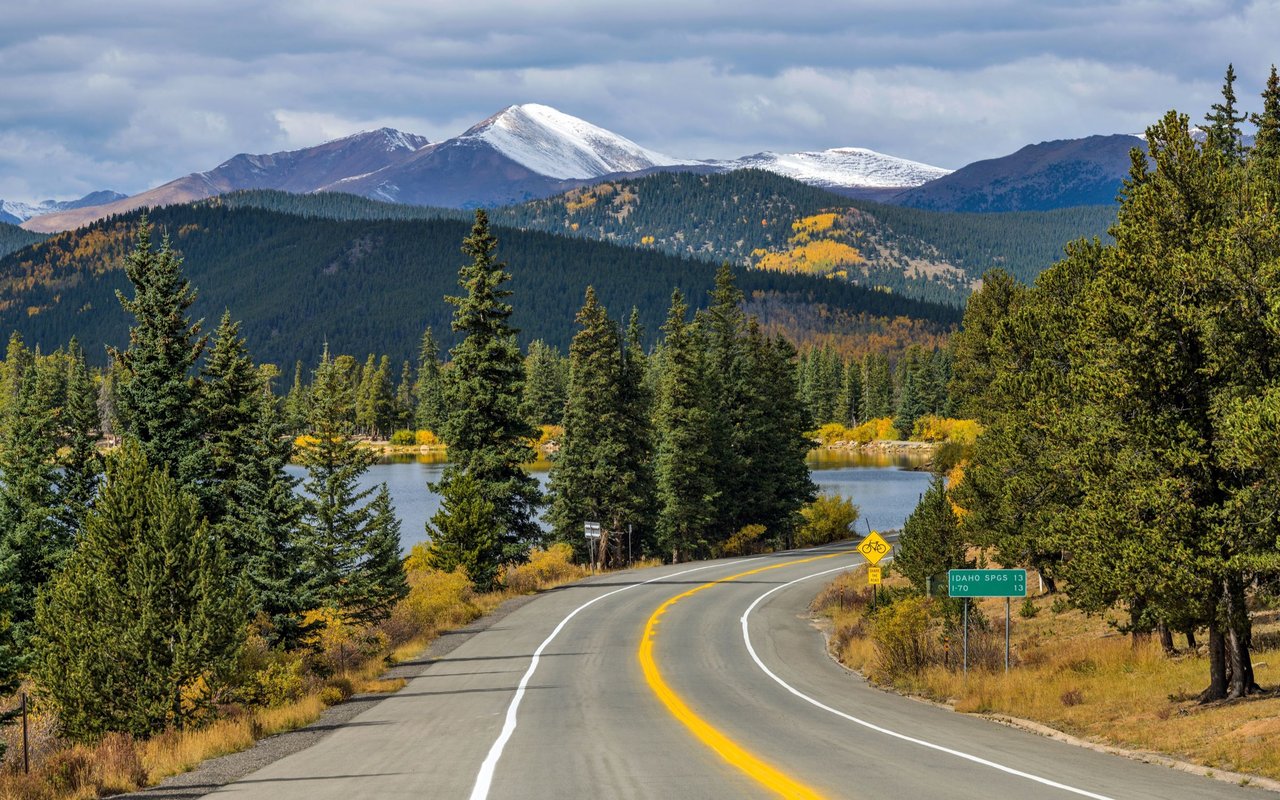
Drive the four miles of Ski Hill Road from the stoplight in downtown Driggs to the Wyoming state line and you pass through roughly fifteen communities packed onto half-acre and two-and-a-half-acre lots: Stoneridge Townhomes, Powder Valley Townhomes, Aspen Pointe with Teton Creek running through it, Teton Creek Resort at the border itself, and the older, better-known names further up the grade like Targhee Ranch, Ski Hill Ranches, Miller Ranch, Redtail, and Falcon Creek. Every one of those addresses sells on the same premise: this is the road to Grand Targhee, and Grand Targhee is getting bigger.
That premise is true. It is also incomplete in a way that matters if you are pricing a parcel on this corridor right now.
What Got Approved in May Isn't What's Happening Now
In late May, the U.S. Forest Service issued a draft decision approving a 694-acre expansion of Grand Targhee Resort's special use permit, pushing the resort's total footprint to roughly 3,000 acres and clearing the way for new terrain in the South Bowl and Mono Trees zones and a restaurant near the summit of Fred's Mountain. Coverage at the time treated it as a green light. What followed was closer to a stop sign.
The draft decision opened two objection windows, 45 days and 60 days, open only to people and organizations who had already filed comments during the original environmental review. By the time those windows closed, the Forest Service's public reading room held nearly 1,300 submitted letters, including more than 300 formal objections. Grand Teton National Park's own superintendent filed one, raising unresolved concerns about visibility from inside the park. Wyoming Game and Fish filed another, arguing that even the scaled-back plan still displaces the Teton Range bighorn sheep herd from prime winter habitat. Weeks after the objection period closed, the forest's spokesman told a reporter the agency still had no timeline for a final Record of Decision, and that the process gives officials room to change the outcome if objectors can show something material was missed.
In plain terms: there is no finished expansion to price into a Ski Hill Road parcel. There is a draft that a federal reviewing officer is still working through, with the possibility that the final version looks different from the one making headlines in May.
The Money Behind the Mountain Never Crosses the State Line
Even setting the timeline aside, the deal buyers are implicitly betting on has an asymmetry baked into it that predates this year's headlines. Grand Targhee sits entirely inside Teton County, Wyoming, near Alta. The only way to reach it by car is Ski Hill Road, which runs through Teton County, Idaho. Wyoming collects the sales and lodging tax the resort generates. Idaho collects almost none of it, while absorbing the traffic, the road wear, and the emergency response.
County Commissioner Ron James put a figure on that gap during a May 27 meeting of the Teton County, Idaho, Board of County Commissioners, one day before the Forest Service signed its draft decision: Teton County, Wyoming stands to collect about $3 million a year in tax revenue from the expansion, against roughly $275,000 for Teton County, Idaho, the county that actually owns and maintains the road everyone drives to get there.
"We're getting crumbs off of this."
The gap is made worse by state law, not just geography. Idaho caps annual property tax revenue growth for counties at 3 percent, a ceiling that holds regardless of how many visitors pass through on a given weekend. Idaho cities can tap lodging and local option taxes to capture some tourist spending. Idaho counties cannot. James pushed legislation in 2025 to let counties impose a short-term rental fee to help cover tourism-driven costs. It was blocked before it became law.
The One Payment That Does Exist, and What It Doesn't Cover
There is already one cross-border arrangement in place, and it is worth understanding precisely because of how narrow it is. Wyoming pays Teton County, Idaho, Fire and Rescue about $580,000 a year to staff emergency response coverage for the Alta side of the mountain, money that funds roughly six additional positions the department otherwise couldn't afford. It is a real subsidy and a working example that cross-state cost-sharing is possible.
It also covers fire and ambulance service only. It says nothing about the pavement itself, the snowplows, or the sheriff's patrols on a road that both counties agree will see more traffic once any version of the expansion clears its final review. In late July, officials from both counties sat down for a joint workshop, funded in part by a $30,000 study that Teton County, Idaho, contributed $5,000 toward, to explore whether a broader revenue-sharing agreement is possible. Ideas on the table included a toll on Ski Hill Road itself and tapping into Grand Targhee's existing resort tax. None of it has been adopted. All of it is still a conversation, not a policy.
Here's how the two sides of that conversation compare on paper right now:
| Teton County, Wyoming | Teton County, Idaho | |
|---|---|---|
| Projected annual tax revenue from expansion | About $3 million | About $275,000 |
| Responsible for maintaining Ski Hill Road | No | Yes, sole access corridor |
| Existing cross-border payment received | Collects resort's sales and lodging tax | About $580,000/year, fire and EMS staffing only |
| State cap on property tax revenue growth | Not part of this arrangement | Capped at 3% annually |
What This Means for a Ski Hill Road Address Today
None of this means the corridor stops being desirable. It means the value of "twelve miles from Grand Targhee" carries a second, less visible number attached to it: whether the county responsible for the road you drive every day has the budget to keep up with the traffic a bigger resort will bring, on a timeline nobody can currently confirm.
A few things worth checking on any parcel along this stretch before you assume the math works itself out. First, whether the address sits inside Driggs city limits or in the unincorporated county beyond it. Development along Ski Hill Road tends to break at roughly a half-acre to two-and-a-half-acre lot size once you cross that line, largely because density rules loosen outside city jurisdiction, and that boundary also determines who is on the hook for plowing and paving your stretch of road. Second, whether the property's HOA or covenants fund snow removal and road upkeep independently of the county, since a self-funded subdivision is less exposed to a county budget squeeze than one relying entirely on public maintenance. Third, treat any timeline tied to the expansion itself, whether it's a promised restaurant, new lifts, or increased visitor counts, as unconfirmed until the Forest Service issues a final Record of Decision. The objection process exists precisely because the draft can still change.
Frequently Asked Questions
Is the Grand Targhee expansion definitely happening? Not as a finished fact. The Forest Service issued a draft decision in May, but more than 300 formal objections are still under review, including from Grand Teton National Park and Wyoming's own wildlife agency, and the agency has said it has no timeline for a final decision.
Does the funding gap affect the whole Driggs market or just Ski Hill Road? The most direct exposure is the corridor itself, since it is the only physical access route to the resort. County-level effects, like budget strain on emergency services and general infrastructure, ripple more broadly across Teton County, Idaho, but the road is where the pressure concentrates first.
Is anyone actually fixing the tax mismatch? Ideas are circulating, including a toll on the Idaho side of the road and tapping Grand Targhee's existing resort tax, and both counties funded a joint study to explore formal revenue sharing. None of it is law yet. A 2025 attempt to let Idaho counties tax short-term rentals to cover tourism costs was blocked before passage.
Does Wyoming already pay Idaho anything for the resort's impact? Yes, but narrowly. Wyoming pays Teton County, Idaho, Fire and Rescue roughly $580,000 a year, funding about six additional staff positions to cover emergency response on the Alta side. That agreement doesn't extend to road maintenance or general infrastructure.
The resort's calendar and the county's balance sheet are two different documents right now, and the gap between them is exactly the kind of detail that doesn't show up in a listing description. If you're weighing a property along this corridor, we'd rather walk through the jurisdiction, the maintenance responsibility, and the actual state of the federal review with you before you write an offer, not after. That's the kind of groundwork Wealthwise Real Estate does on every Teton Valley conversation we have.