Ready to trade a standard backyard for pasture, hay ground, or a few acres with room to breathe? Buying small farm and ranch property around Ashton can be exciting, but it also comes with a different set of questions than a typical home purchase. If you want land that fits your goals, protects your investment, and works the way you expect, it helps to know what to check before you fall in love with a parcel. Let’s dive in.
Know what the land is meant to do
Not every rural property around Ashton serves the same purpose. Fremont County planning materials distinguish between irrigated agricultural land, non-irrigated agricultural land, and rangeland suitability. That matters because one parcel may be best for crop production, another for grazing, and another for a rural lifestyle with limited agricultural use.
As a buyer, your first question should not be acreage alone. You also need to know what the land is legally allowed to do. In Fremont County, parcel-by-parcel verification matters because zoning and development rules shape what you can build, how you can use the land, and whether your plans fit the county code.
Check zoning before you plan
Zoning is one of the biggest issues in buying small farm and ranch properties around Ashton. A property may look perfect for a homesite, horse setup, or hobby operation, but the legal use can be very different from what you assume when you walk the land.
AG zoning has strict limits
Fremont County’s AG Agriculture Zone is designed for agricultural protection areas. The code says this designation may only be applied when requested by landowners, the parcel must be at least five acres to request the designation, and the district minimum lot size is 40 acres. Subdivision is generally not allowed except for exempt divisions.
The AG zone also generally does not allow residential uses unless an active agricultural operation obtains a conditional use permit for a dwelling. If you are imagining a small acreage with a house and a little room for animals, this is a major point to verify early.
RB and RL are not the same
The RB Rural Base Zone is intended to preserve agricultural lands and rangelands and is not meant for non-agricultural development. The RL Rural Living Zone, by contrast, is meant for low-density residential uses that support a rural lifestyle.
That distinction can shape your entire buying decision. If you want a rural homesite with some flexibility for personal use, RL may fit your goals better than AG or RB. If you want land with a stronger agricultural orientation, AG or RB may make sense, but you still need to confirm what is allowed on that specific parcel.
Water matters as much as the land
In the Ashton area, water is often the most important part of the due diligence process. Idaho water law can surprise buyers, especially if you are coming from another state and assume water access works the same way everywhere.
Idaho Department of Water Resources says a water right is authorization to use water, not ownership of the water itself. Water rights are treated as real property rights, and the priority date helps determine who gets water during shortages.
Stream frontage does not create water rights
One of the most important rules for buyers is this: Idaho does not recognize a riparian right to divert and use water. In simple terms, just because a parcel touches a stream does not mean you have the right to irrigate from it.
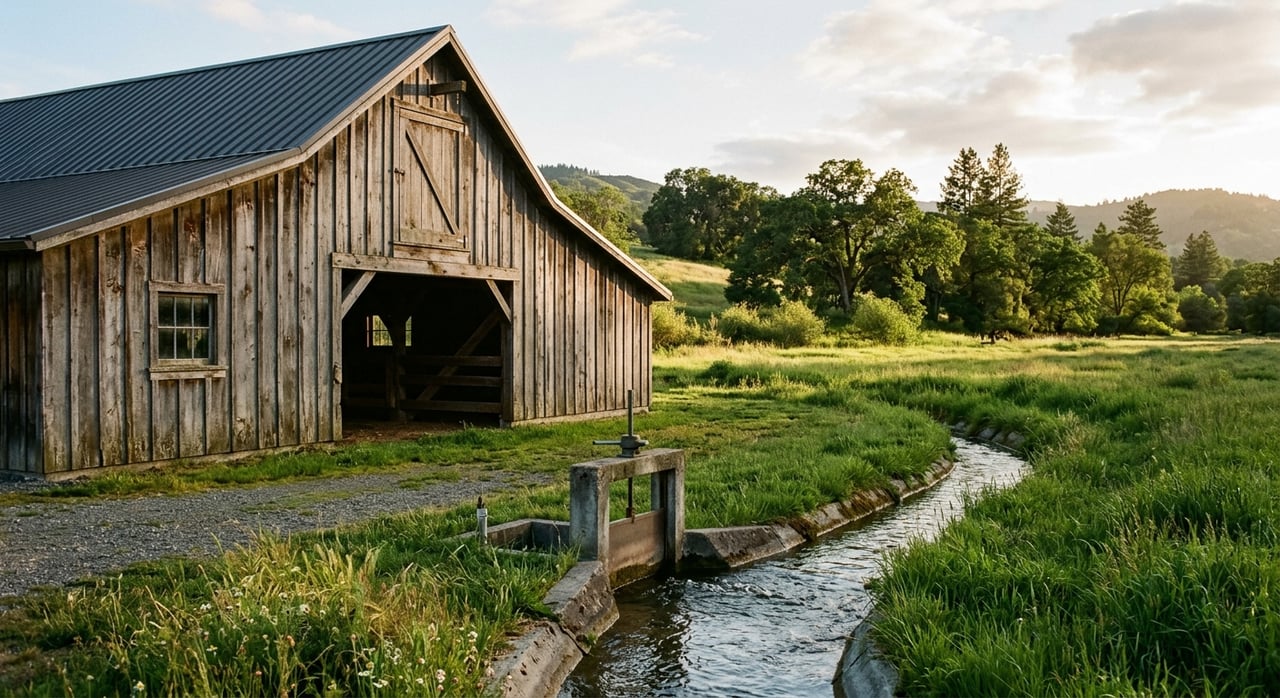
That makes water-right verification essential. A beautiful creek or canal nearby may add appeal, but it does not replace the legal right to use water for irrigation or other needs.
Domestic water is limited
For lighter-use properties, IDWR says a domestic right covers homes, livestock, and related uses, including irrigation of up to one-half acre. That can work for a rural residence or a modest hobby setup, but it is not the same as a full irrigation right for production ground.
If you plan to raise hay, irrigate pasture, or support a more active agricultural use, you need to confirm whether the parcel has appurtenant irrigation rights and whether those rights match your intended use.
Verify transfer details before closing
IDWR says appurtenant water rights transfer with the land unless the seller reserves them in the deed. Even so, you should not assume everything is clean and complete just because a listing mentions irrigation.
Before closing, ask for:
- Water right numbers
- The diversion point
- The season of use
- Any pending transfer paperwork
- Details on whether service comes through an irrigation district, canal company, or private share
Water District 01 includes areas in Fremont County, and IDWR notes that irrigation organizations own water rights and control delivery within their boundaries. That means delivery access, organization rules, and place-of-use details may be just as important as the deed itself.
Match the property to your real goals
Small farm and ranch properties around Ashton can serve very different buyers. Some want production ground. Others want horse property, a part-time rural retreat, or land to hold for long-term family use.
The best purchase usually starts with a clear definition of purpose. When your goals are clear, it becomes easier to narrow down the right zoning, water setup, improvements, and budget.
Common property goals buyers bring to Ashton
- A rural homesite with space and privacy
- Horse property with room for barns, fencing, and turnout
- Small hay or pasture ground
- Mixed-use acreage for livestock and personal enjoyment
- Legacy land for family use and long-term stewardship
A parcel that works well for one of these goals may be a poor fit for another. That is why land buying benefits from an intent-first approach instead of shopping by acreage alone.
Plan for Ashton’s climate and operating reality
The land may look calm on a summer showing day, but year-round ownership tells a fuller story. NOAA normals for Ashton 1N place the area at 5,212 feet elevation, with an annual mean temperature of 43.4°F, annual precipitation of 19.67 inches, and annual snowfall of 70.1 inches.
July’s mean daily maximum is 82.6°F, while January’s is 29.2°F. For you as a buyer, that points to practical questions about snow access, winter feeding, equipment storage, livestock shelter, and seasonal maintenance.
Walk the property with all seasons in mind
A property that feels easy to manage in July may look very different in January. Driveways, outbuildings, fencing, irrigation features, and access points all deserve a closer look if you plan to use the property year-round.
This is especially important if you are buying from out of the area or considering a second-home or legacy-hold strategy. Climate affects both enjoyment and carrying costs.
Watch for weeds and land upkeep
Land stewardship is part of ownership, and weed control should be on your checklist before you buy. Fremont County’s weed-control program advises landowners to inspect property regularly, contact weed control for identification and treatment consultation, and use integrated methods such as grazing, mowing, and other control techniques.
The county also states that certain noxious weeds must be reported quickly to the Idaho State Department of Agriculture. If a property has neglected fields, ditch banks, or unmanaged corners, that can become your issue after closing.
Ask practical upkeep questions
When evaluating a parcel, consider asking:
- Has the property had recent weed issues?
- Who has been managing mowing or grazing?
- Are there irrigation ditches, canals, or field edges that need regular maintenance?
- Is there equipment storage already in place?
These details help you understand the true work and cost of ownership, not just the purchase price.
Review property taxes and valuation
Rural property costs do not stop at closing. Idaho property tax applies to farmland, and Fremont County says assessment notices go out in early June, tax bills are mailed in November, and every parcel is physically reappraised at least once every five years.
That makes it wise to verify the current valuation and any exemptions directly with the county assessor. A seller’s estimate may not reflect your future tax picture, especially if use changes after purchase.
First-time farm buyers should start with a plan
If this is your first farm or ranch purchase, you do not need to know everything on day one. You do need a clear plan for what you are trying to buy and why.
USDA says a good farm business plan serves as a roadmap to startup, profitability, and growth. It also becomes the foundation for conversations about financing and program fit. Even if you are buying a small property, thinking through income goals, operating costs, land use, and long-term purpose can save you from buying the wrong acreage.
Helpful starting points for new buyers
For production-minded buyers, NRCS recommends starting with the local field office for conservation planning and technical assistance. NRCS also says form AD-1026 helps ensure a conservation plan is in place before highly erodible soils are farmed, and a farm tract number can be obtained through USDA’s Farm Service Agency.
If your purchase is more lifestyle-focused, a simpler version of planning still helps. Think through how much land you want to manage, what water use you need, and whether the property is meant to produce income, support animals, or simply give you room to live differently.
Think long term about legacy and succession
For many buyers in and around Ashton, land is not just a lifestyle purchase. It is also a legacy decision. USDA research notes that farmland tenure affects production, conservation, and succession planning, which means ownership structure and long-term management deserve attention early.
If you are buying with family, holding for future generations, or combining personal use with investment goals, think beyond the closing table. Consider who will operate the property, how the asset will be held, and what the transfer plan should look like over time.
That kind of planning fits especially well with small farm and ranch properties, where personal use, financial value, and family meaning often overlap.
If you are exploring small farm and ranch properties around Ashton, the right guidance can help you sort through zoning, water, land use, and long-term fit with more confidence. For a thoughtful, private, and financially informed approach to Idaho land, connect with Wealth Wise West.
FAQs
What zoning should you look for on small farm property around Ashton?
- In Fremont County, AG and RB zones are oriented toward agricultural use, while RL is aimed at low-density rural living, so the right fit depends on whether you want production land, grazing ground, or a rural homesite.
Can you build a house on Ashton-area agricultural land?
- It depends on the parcel’s zoning and approvals, because the AG zone generally does not allow residential use unless an active agricultural operation obtains a conditional use permit for a dwelling.
Do water rights transfer with farm and ranch land in Idaho?
- Appurtenant water rights generally transfer with the real property unless the seller reserves them in the deed, but you should still verify ownership details and the proper transfer paperwork with IDWR.
Is stream frontage enough for irrigation on land near Ashton?
- No, because Idaho does not recognize a riparian right to divert and use water, so frontage alone does not create an irrigation right.
What does a domestic water right cover on a small rural property in Idaho?
- IDWR says a domestic right covers homes, livestock, and related uses, including irrigation of up to one-half acre.
What should first-time buyers do before buying a small farm near Ashton?
- Start with a clear business or use plan, then verify zoning, water rights, taxes, climate-related needs, and any conservation or operational requirements tied to the property.